
System-Based Brand Building: Architecture vs. Chaos
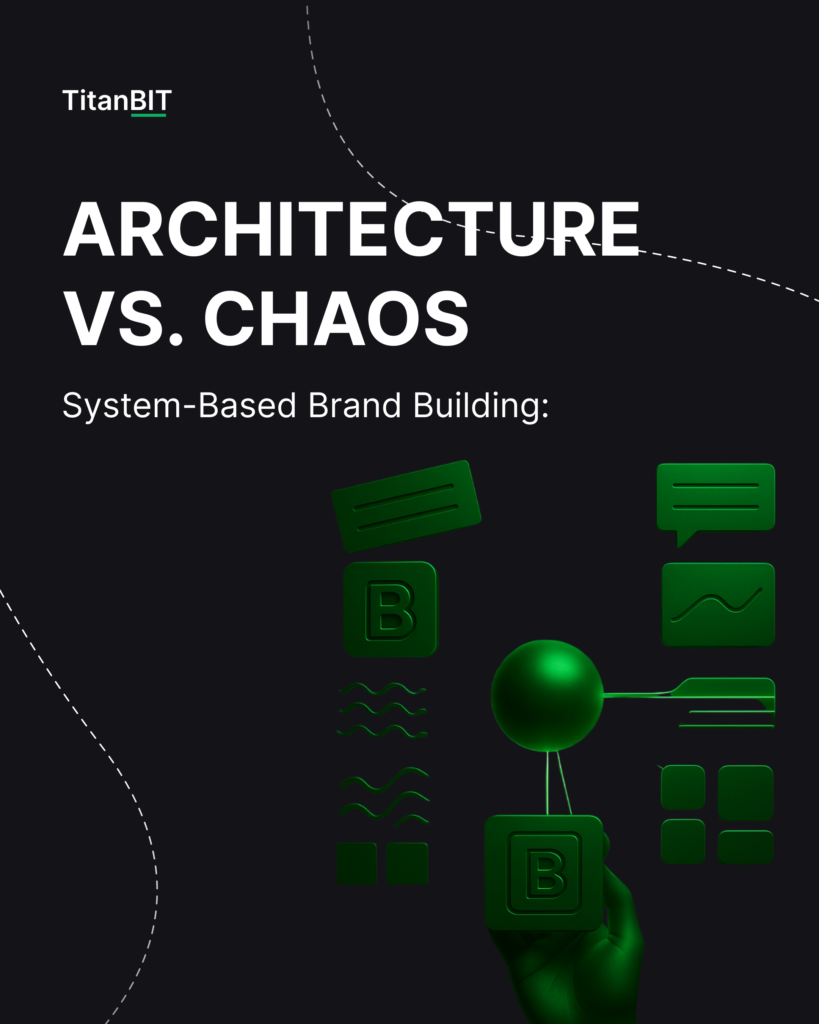
In 2025, branding is no longer about producing beautiful visuals — it’s about creating a scalable system.
Most brands don’t lose attention because of poor design, but because they lack structure.
A logo alone doesn’t build recognition; a color palette alone doesn’t build trust.
Only when these elements work together through a clear architecture does the brand become memorable.
Why brand architecture matters now more than ever
Consumers today interact with dozens of touchpoints: websites, apps, ads, emails, social content, motion, and even micro-interactions.
If each of these touchpoints looks and feels different, the brand becomes fragmented and forgettable.
This is the main reason small and mid-sized companies struggle to build long-term identity — they invest in assets instead of systems.
The core of an effective brand system
A modern brand architecture connects every element to a central core — the brand’s meaning, purpose, and value.
From this core, all components derive their logic:
- Visual identity (logo, typography, colors, grid)
- Tone of voice and messaging
- Motion design and micro-interaction patterns
- Storytelling rules
- UX and UI principles
This turns design from decoration into a strategic tool.
From chaos to clarity
Without architecture, teams produce inconsistent visuals, mismatched layouts, and contradictory messages.
With architecture, creativity becomes coordinated: every touchpoint reinforces recognition.
This alignment is what allows brands like Apple, Tesla, and Notion to appear coherent everywhere — even when formats differ.
The 2025 principle: system > assets
Today’s attention economy rewards clarity and consistency.
Brands that build structured systems scale faster, communicate more effectively, and earn trust more naturally.
You don’t need more visuals.
You need a brand engine that turns chaos into coherence.💬 Does your brand behave like a system — or like a collection of disconnected pieces?