
Visibility Is the New Control Layer in Modern Companies
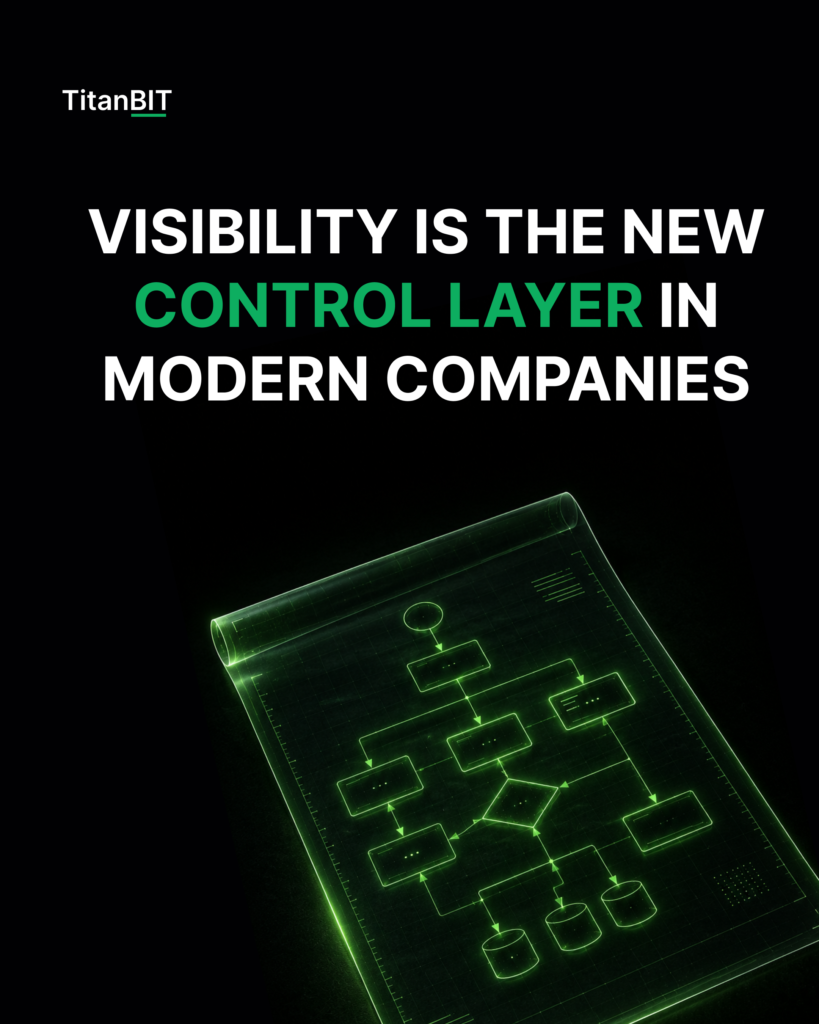
Modern companies are surrounded by data, tools, and automated processes. Every interaction, campaign, and operation generates information that is tracked and visualized across multiple platforms. On the surface, this creates the impression of control.
However, in reality, most companies are not lacking data — they are lacking visibility.
Data Does Not Equal Visibility
Having access to dashboards and analytics does not mean understanding how a system actually works. Data points exist, but they are often fragmented and disconnected. Teams see numbers, but they don’t see relationships between them.
Visibility in modern companies is not about collecting more information. It is about creating a clear and connected view of how the system behaves in real time.
Without this, data becomes noise.
Why Visibility Is the New Control Layer
Control used to come from hierarchy, reporting structures, and manual oversight. Today, control is shifting toward visibility layers that make systems transparent and understandable.
When companies build visibility into their systems, they can:
- identify bottlenecks earlier
- understand cause-and-effect relationships
- detect performance drops in real time
- make faster and more accurate decisions
Visibility becomes the layer that connects data to action.
Without it, companies operate reactively. With it, they operate proactively.
From Data Collection to System Clarity
The key shift in modern companies is moving from data collection to system clarity.
It’s not about having more metrics, but about understanding how processes interact, where value is created, and where it is lost. Visibility allows teams to see the full picture instead of isolated fragments.
This transforms decision-making from assumption-based to system-based.
Conclusion: Visibility Defines Control
In modern companies, visibility is no longer optional.
It is the foundation of control.
Companies that invest in visibility layers gain the ability to understand, manage, and scale their systems effectively. Those that rely only on data remain limited by fragmentation and uncertainty.
The competitive advantage is no longer access to tools or information.
It is the ability to clearly see how everything works together.
💬 Do you truly have visibility into your system — or just access to data?