
Marketing Teams Are Turning Into System Operators
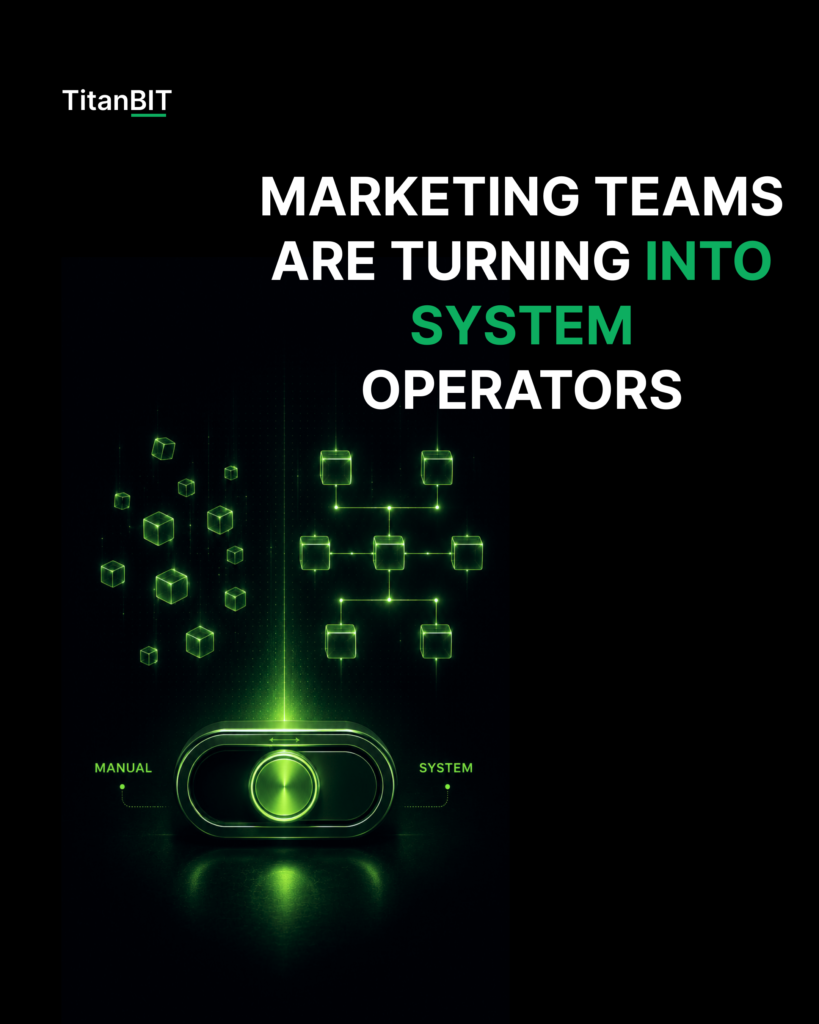
Marketing is undergoing a structural transformation. For years, marketing teams were defined by execution — launching campaigns, managing channels, creating content, and optimizing performance manually.
That model is no longer sustainable.
From Execution to Operation
With the rise of AI and automation, the execution layer of marketing is rapidly being replaced. Campaigns can be deployed faster, content can be generated at scale, and workflows can run continuously without direct human involvement.
This shift changes the role of marketing teams.
They are no longer defined by what they do.
They are defined by how they design systems.
Why This Shift Matters
Execution is becoming commoditized.
The ability to launch a campaign or produce content is no longer a differentiator. Almost every company now has access to the same tools and technologies.
This creates a new competitive dynamic.
The advantage moves to those who can structure and operate systems effectively.
A well-designed system ensures consistency, scalability, and control. It connects tools, aligns processes, and allows marketing efforts to run predictably.
Without this structure, automation only increases chaos.
The New Role of Marketing Teams
Modern marketing teams are evolving into system operators.
They focus on:
– designing workflows
– connecting tools
– defining logic and rules
– optimizing system performance
Instead of executing individual tasks, they manage how the system executes those tasks.
This is a fundamental shift in mindset.
From doing the work → to controlling how the work gets done.
Conclusion
The future of marketing is not about doing more.
It is about building systems that do more.
Teams that adapt to this shift will scale faster, operate more efficiently, and create consistent results.
Those who continue to focus only on execution will struggle to keep up.
💬 Are you still working inside the system — or already operating it?