
Tools Are Replaceable. Systems Are Not
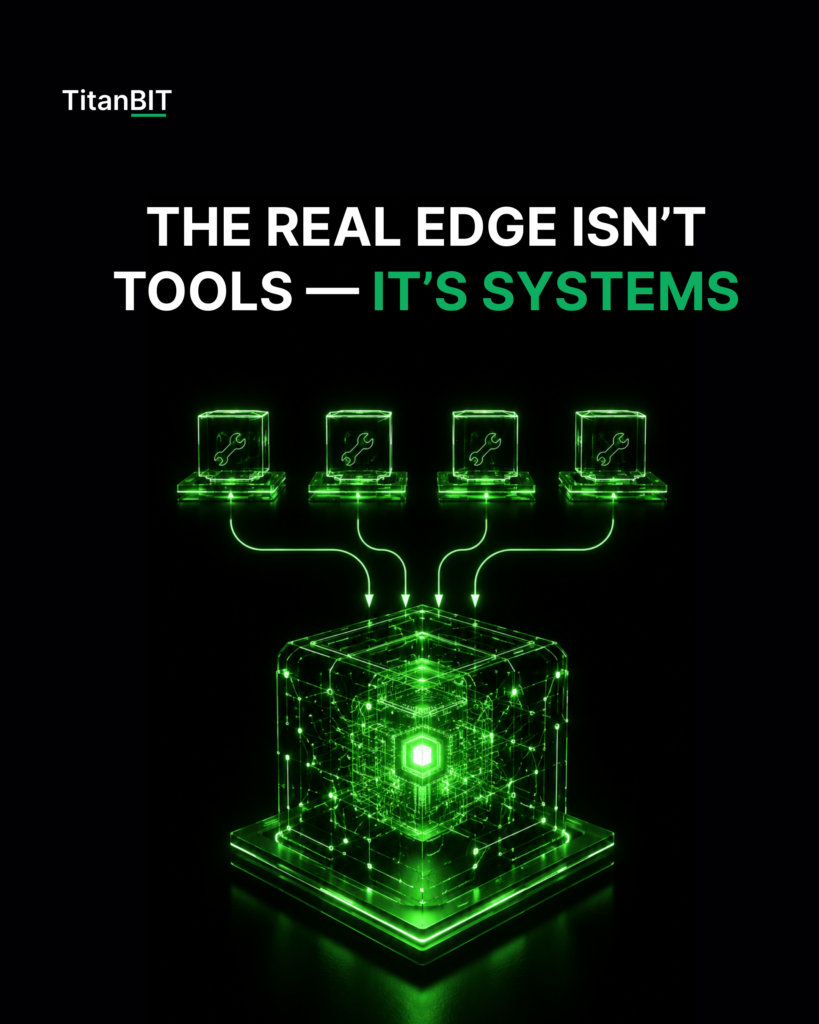
The modern business environment is defined by an abundance of tools. From AI platforms to automation systems and analytics solutions, companies now have access to more technology than ever before.
At first glance, this should create a strong competitive advantage.
In reality, it does not.
The Commoditization of Tools
Tools are becoming commodities.
What used to be expensive and exclusive is now widely доступне. AI tools, marketing platforms, and automation solutions are available to companies of all sizes.
This means that simply using a tool is no longer enough to stand out.
Access is no longer the advantage.
Why Tools Alone Don’t Create Results
Many businesses assume that adding more tools will improve performance.
But tools do not operate in isolation. Without a clear structure, they become disconnected elements within a system.
This leads to fragmentation.
Processes do not align.
Data does not flow properly.
Execution becomes inconsistent.
As a result, companies invest more in tools but fail to see meaningful improvements.
Systems Create the Real Advantage
The real differentiator is not the tool itself.
It is the system behind it.
A well-designed system connects tools, aligns processes, and ensures that every component contributes to a larger outcome.
This creates consistency, scalability, and control.
Two companies may use identical tools, but the one with a stronger system will always outperform the other.
Conclusion
Tools are becoming interchangeable.
Systems are not.
The companies that win are not those with the most advanced tools, but those with the most structured and connected systems.
Because without a system, tools are just isolated capabilities.
💬 Are your tools working together as a system — or operating as disconnected parts?