
Marketing Teams Are Becoming Orchestration Teams
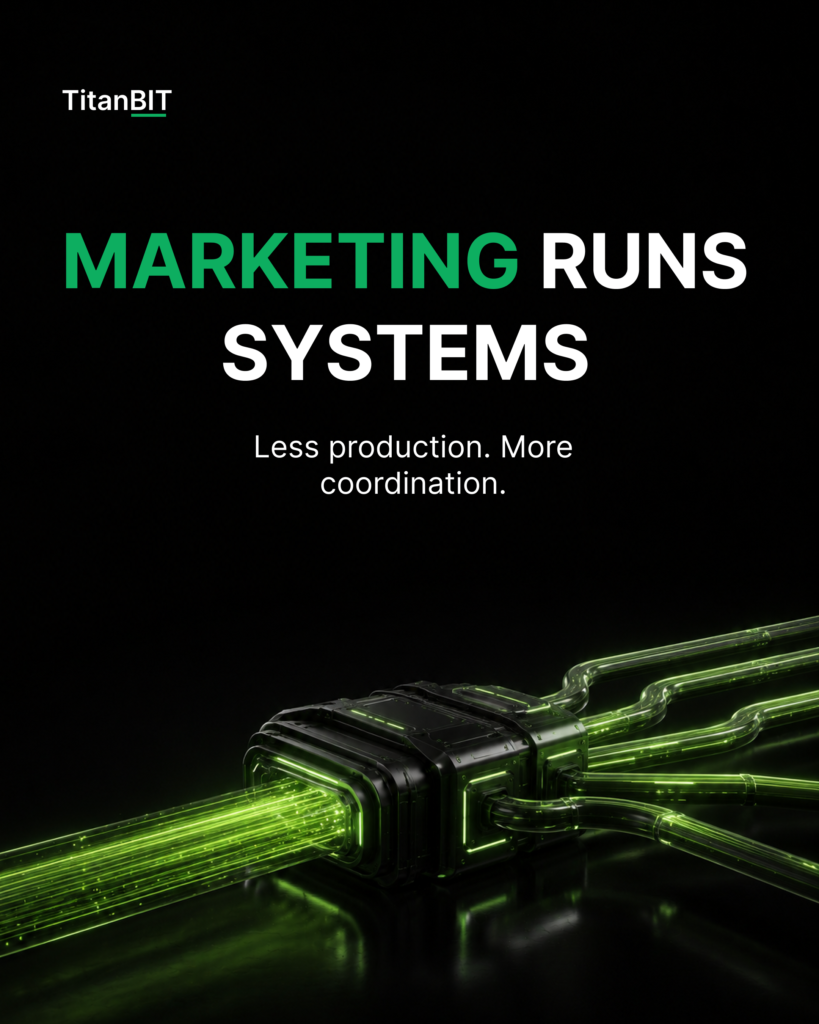
Marketing is entering a new phase.
For years, success was measured by how much content a team could produce, how many campaigns it could launch, and how quickly it could execute ideas. Today, AI is rapidly taking over many of those production tasks. It can generate copy, create visuals, analyze performance, summarize research, and automate repetitive workflows.
This doesn’t reduce the importance of marketing.
It changes its purpose. 🤖
AI Is Changing the Nature of Marketing Work
The discussion around AI often focuses on replacement.
In reality, the biggest shift is coordination.
As organizations adopt multiple AI tools and specialized agents, marketing teams become responsible for making these systems work together. Creative generation, analytics, audience insights, campaign optimization, automation, and reporting all need to operate within one connected workflow.
Without orchestration, businesses simply replace manual work with fragmented automation.
Orchestration Creates Business Value
The highest-performing marketing organizations are no longer the ones producing the largest volume of content.
They are the ones building systems where information flows efficiently between people, AI agents, data sources, and business objectives.
Marketing becomes the operational layer that coordinates intelligence instead of manually executing every task.
This creates faster decisions, stronger consistency, better performance, and significantly higher scalability. ⚙️
The Future Belongs to Orchestrators
As AI capabilities continue to expand, production becomes increasingly automated.
The real competitive advantage shifts toward orchestration.
Marketing leaders will spend less time creating individual assets and more time designing workflows, coordinating intelligent systems, managing performance signals, and ensuring every part of the marketing engine works together.
The future of marketing is not defined by producing more.
It is defined by orchestrating better.