
Data Is Everywhere — Clarity Is Not
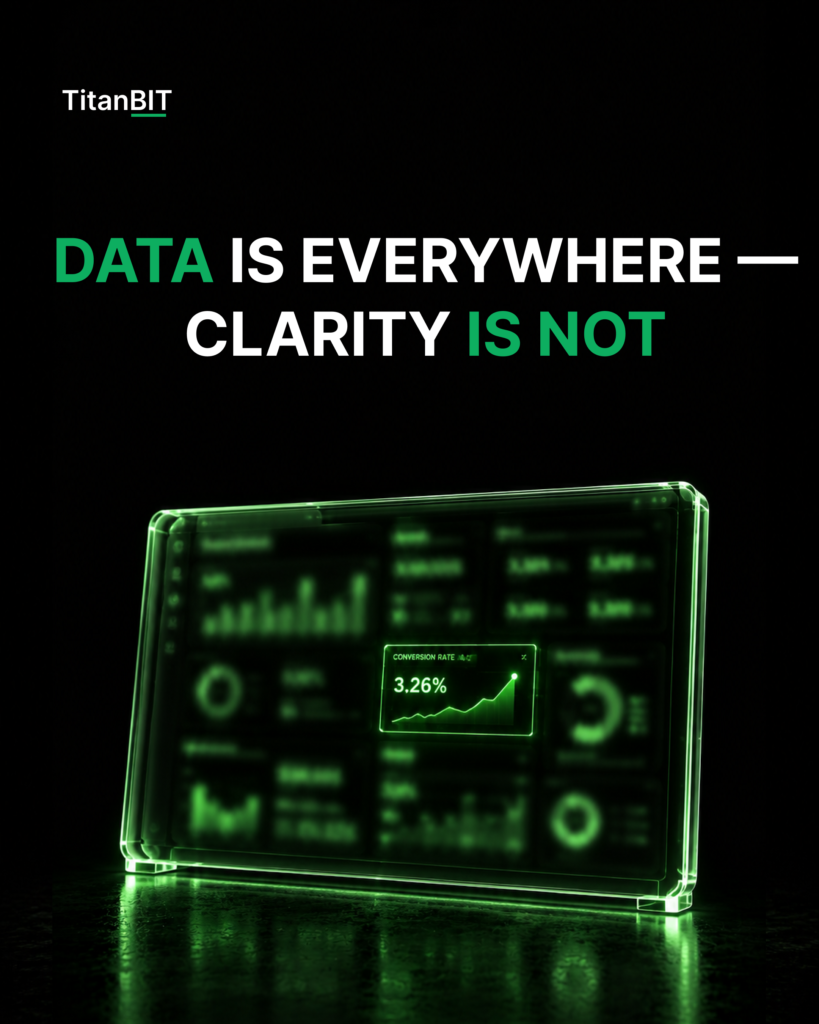
The modern business environment is defined by an abundance of data. Companies collect information from multiple sources — marketing platforms, CRM systems, analytics tools, and customer interactions.
At first glance, this should lead to better decisions.
In reality, it often leads to the opposite.
When Data Becomes Noise
Having access to more data does not automatically improve decision-making. When multiple signals are present without structure, they begin to conflict with each other.
Different metrics suggest different actions. Teams interpret the same data in different ways. As a result, instead of creating clarity, data creates uncertainty.
This slows down execution.
Decisions take longer. Confidence decreases. And despite having more information than ever, businesses struggle to act effectively.
The Problem Is Not Data — It’s Interpretation
The core issue is not the volume of data, but the lack of a system that organizes and prioritizes it.
Without clear structure, data remains fragmented. It exists in dashboards and reports, but it does not translate into actionable insight.
This creates a situation where businesses are data-rich but insight-poor.
From Data to Clarity
Clarity comes from systems, not from volume.
Effective organizations do not rely on raw data alone. They build frameworks that filter noise, highlight relevant signals, and align information with decision-making processes.
This allows teams to move faster and with more confidence.
Instead of reacting to every signal, they focus on what actually matters.
Conclusion
Data is everywhere.
But clarity is not.
The companies that succeed are not those with the most data, but those with the most structured approach to using it.
The real advantage lies in transforming data into direction.
💬 Does your data system simplify decisions — or make them harder?