
How Big Companies Are Integrating AI into Manufacturing: 8 Automation Trends for 2025
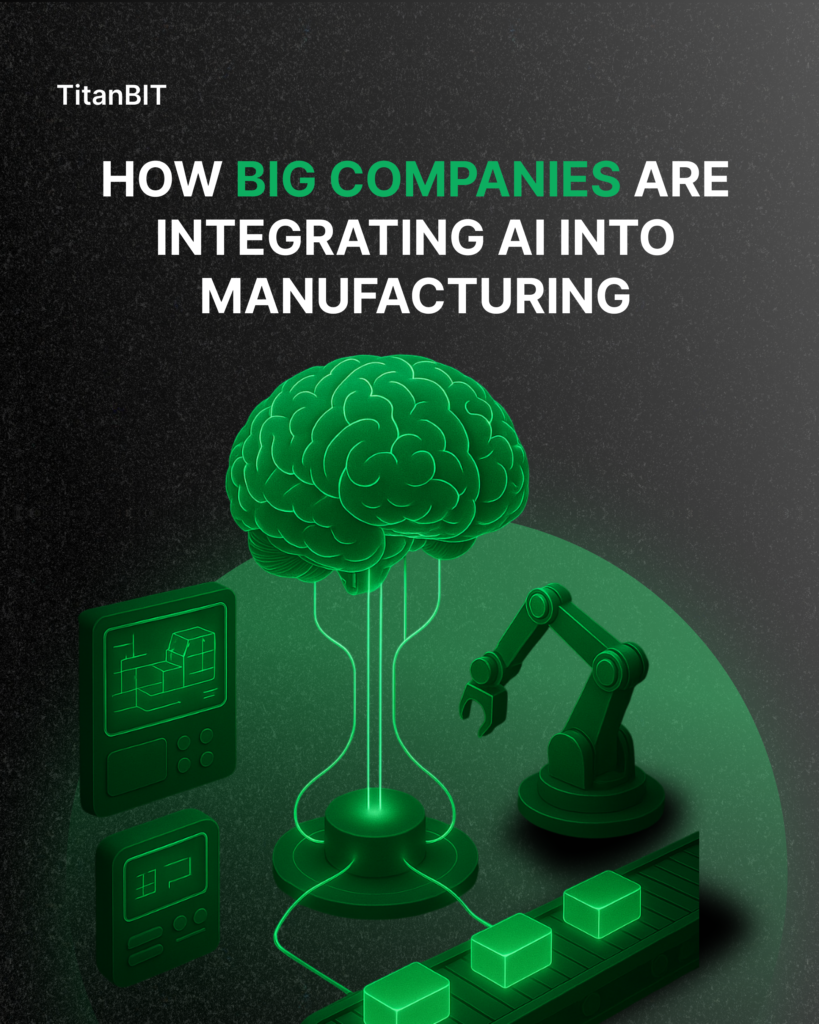
In 2025, industrial automation is no longer about adding tools — it’s about rethinking the entire production logic.
Enterprises leading the race are not upgrading machines — they’re building real-time, intelligent ecosystems.
Here are 8 trends that define the future of AI in manufacturing:
1. 🤖 IIoT + Edge + Cloud
Real-time data doesn’t sit in silos anymore. It moves across sensors, edge devices, and cloud platforms — enabling instant decisions, remote monitoring, and autonomous control.
2. 🧬 Digital Twins
Virtual models of production systems allow teams to simulate, test, and optimize before any physical change is made — reducing waste and increasing precision.
3. 🧠 Predictive AI
Not just tracking — but predicting failures, slowdowns, and inefficiencies. AI analyzes patterns to proactively maintain uptime.
4. 🕹 Smart HMIs
Human-machine interfaces now “think” — adjusting UI based on real-time context and task complexity. Touchless, voice-controlled, or AR-enhanced dashboards are replacing static panels.
5. 🧑🏭 AR/VR for Operations
From training to troubleshooting, augmented and virtual reality create immersive, intuitive experiences that cut down on errors and accelerate onboarding.
6. 🧱 Modular Automation
Systems are becoming flexible — with modular robots and software that adapt to changing production lines.
7. 🌐 Interoperability Standards
As tech stacks expand, seamless data exchange between tools and platforms becomes non-negotiable.
8. ♻️ Sustainable Automation
AI is optimizing for more than output — it’s reducing energy consumption, waste, and emissions.
✅ Conclusion:
Manufacturing is becoming cognitive.
And those who build thinking systems today — will shape the supply chains of tomorrow.
💬 Which of these trends is already shaping your production logic?