
More Tools Won’t Fix a Broken Architecture
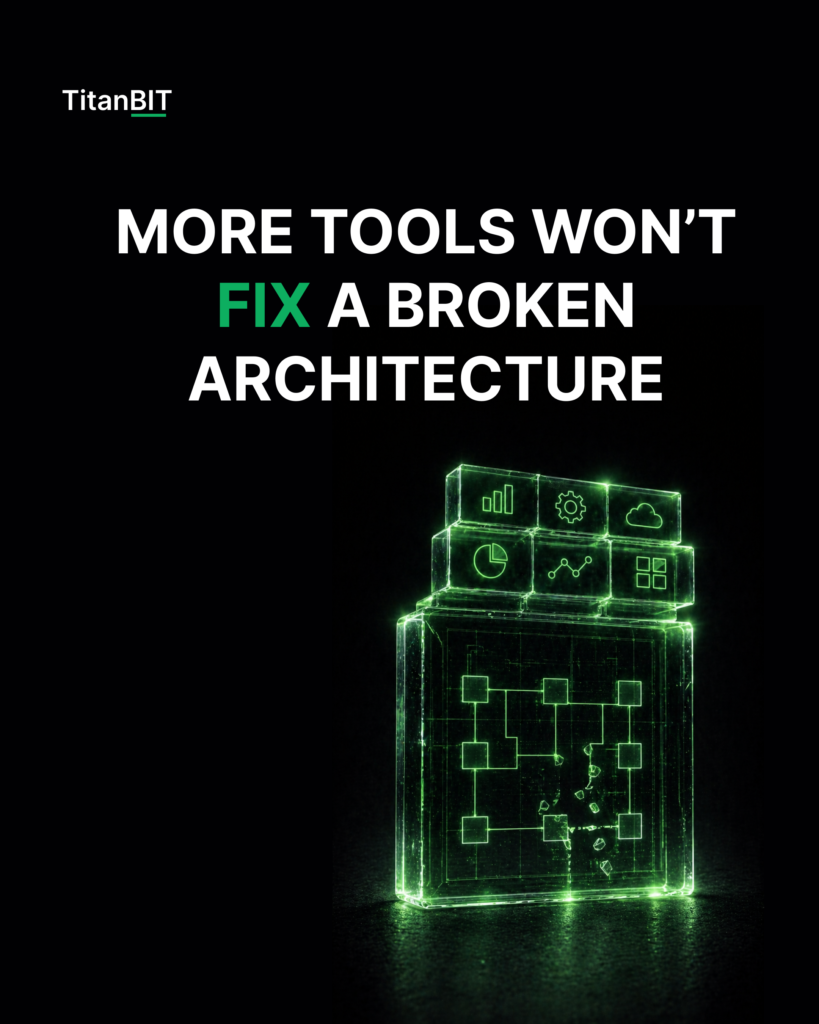
Many businesses believe that adding new tools will solve their problems.
When performance drops or processes become inefficient, the instinct is to introduce new platforms, automation systems, or analytics solutions. At first, this seems logical. Tools promise better organization, improved visibility, and higher efficiency.
But in reality, tools rarely solve the core issue.
Why Companies Rely on Tools
Tools create the feeling of progress.
They provide new interfaces, new features, and new ways to manage information. This makes it seem like the system is improving.
However, tools do not define how a system works. They only operate within the structure that already exists.
If the structure is unclear, tools cannot fix it.
The Problem With a Broken Architecture
When the underlying architecture is weak, adding more tools increases complexity.
Processes remain disconnected.
Data becomes fragmented.
Teams struggle to align their actions.
Instead of creating clarity, the system becomes harder to manage.
Over time, businesses become dependent on tools without understanding how their system actually operates.
Architecture as the Foundation
High-performing companies focus on architecture first.
They define how the system is structured, how processes connect, and how data flows across the organization. This creates a clear foundation.
Only after that do they introduce tools to support the system.
When architecture is strong, tools enhance performance.
When architecture is weak, tools amplify problems.
Conclusion
Tools are not a solution.
They are a multiplier.
If your system is not designed correctly, adding more tools will not fix it — it will make it more complex.
👉 The real question is:
Are your tools built on a clear architecture — or are they trying to compensate for its absence?