
Why Classic Funnels No Longer Work
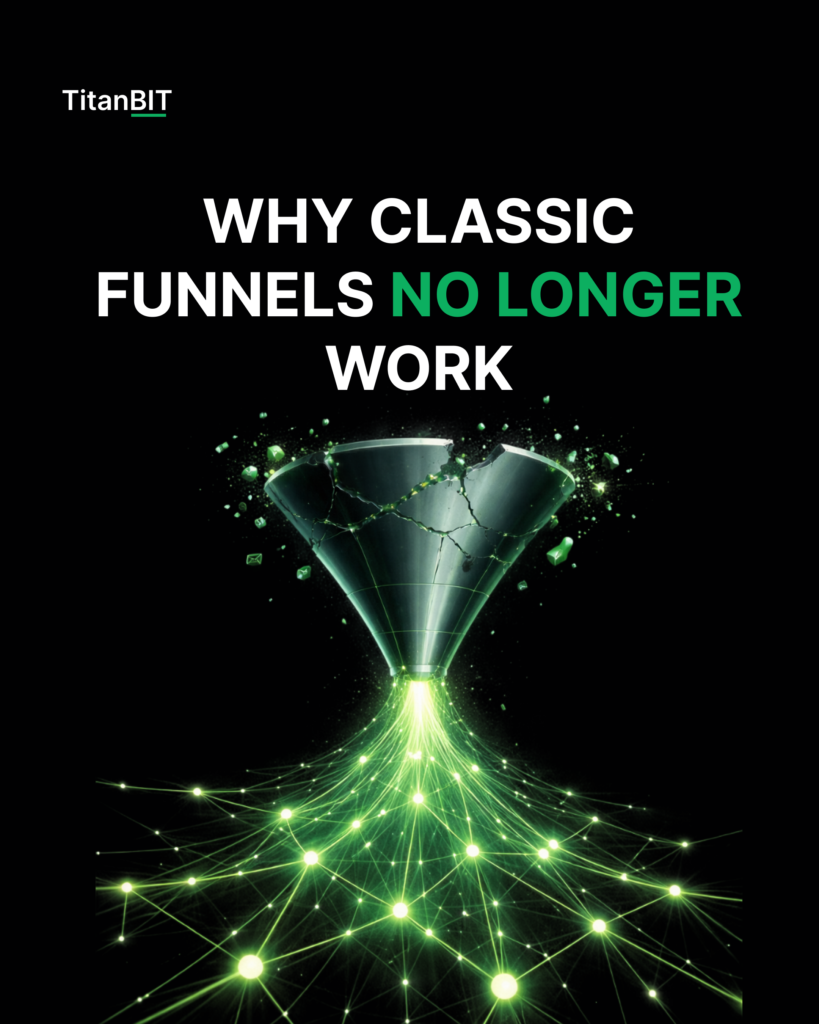
In digital marketing, the traditional funnel once served as a reliable map. Users were expected to move from awareness to consideration to purchase in a predictable sequence. But in 2026, this model is breaking down. Customers behave in dynamic, nonlinear ways, and funnels can no longer capture the complexity of modern decision-making. ⚡️
The Shift Away from Linear Behavior
Today’s users jump between channels, compare multiple products at once, return after long pauses and take unpredictable routes before converting. A single rigid path doesn’t reflect reality. This creates blind spots for marketers and leads to lost opportunities when customers deviate from the expected route.
How AI Changes the Journey
AI introduces a new logic: adaptation. By analyzing real-time signals — dwell time, hesitations, interactions, scroll patterns, and intent indicators — AI rebuilds the journey for each individual. Instead of guiding users through predefined steps, systems react to their unique behavior. 🤖
This approach transforms customer experience into a living process. Messaging becomes context-aware, recommendations adjust automatically and timing adapts to user intent. The result is a more relevant and fluid journey that aligns with how people naturally make decisions. ✨
What Marketers Must Rethink
The collapse of traditional funnels requires a new strategy. Teams must stop relying on linear assumptions and begin designing systems that evolve with the customer. Adaptive journeys allow brands to stay connected across fragmented touchpoints and respond instantly to behavioral changes.
To remain competitive, companies should integrate AI-driven routing, intent analytics and real-time personalization into their core marketing infrastructure. These capabilities create journeys that feel intuitive, flexible and genuinely user-centered. 🚀
Conclusion
Funnels are becoming obsolete not because marketers failed — but because customers evolved. The brands that succeed will be those that embrace nonlinear journeys and build systems that think, adapt and respond at the speed of user behavior.
👉 Want your marketing to stay ahead of the shift? Explore adaptive journey strategies and start designing experiences built for how customers actually move.