
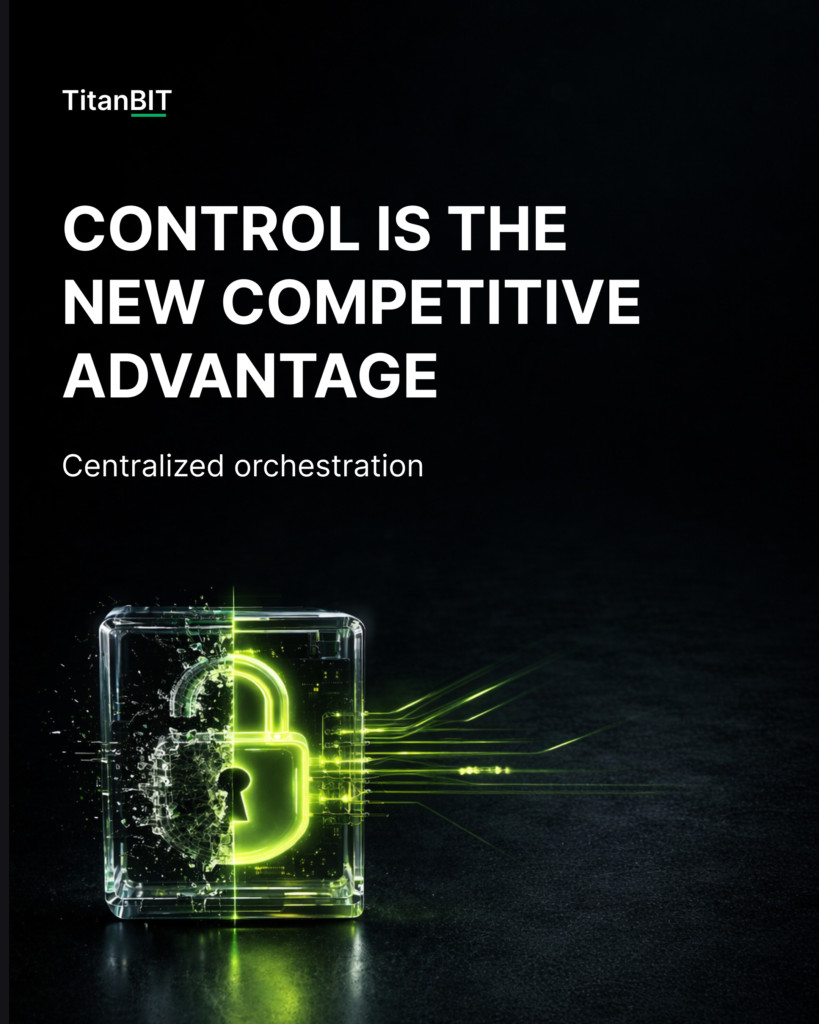
Control Is the New Competitive Advantage
Expansion Is No Longer Enough
For a long time, competitive strength in marketing was associated with expansion. Brands entered new channels, launched additional campaigns, experimented with emerging platforms, and scaled budgets aggressively.
Surface-level growth created the appearance of dominance.
But as ecosystems became more complex, expansion began to reveal its limits. More channels introduced more variables. More campaigns required more coordination. More tools produced more fragmentation.
Without control, growth increased volatility.
The Illusion of Channel Dominance
Organizations often assume that performance scales proportionally with reach. If five channels deliver growth, ten channels should deliver more.
In practice, unmanaged complexity introduces inefficiencies. Budgets overlap. Audiences fragment. Messaging loses coherence. Teams optimize locally without global alignment.
The issue is not the number of channels. It is the absence of orchestration.
Competitive advantage now depends less on expansion and more on governance — the ability to centralize decision-making and coordinate execution across systems.
Centralized Orchestration as a Structural Layer
Centralized orchestration acts as the governing framework of modern marketing. It determines how signals from one channel influence decisions in another. It aligns budget allocation with unified objectives. It ensures that optimization logic operates consistently across the entire ecosystem.
When orchestration is embedded into architecture, channels stop functioning as isolated units. They become interconnected components of a larger system.
Control does not mean rigidity. It means clarity.
Clear rules.
Clear priorities.
Clear execution pathways.
Predictable Scaling
The true test of competitive advantage is not rapid growth. It is repeatable growth.
Predictable scaling occurs when processes are governed by structured logic rather than reactive decisions. When orchestration is centralized, scaling amplifies efficiency instead of chaos.
Organizations that master control gain stability in uncertain markets. They reduce variance, minimize friction, and accelerate coordinated execution.
In a fragmented digital environment, control is no longer operational discipline.
It is strategic leverage.
And in the long term, leverage defines advantage.