
Funnels Don’t Fail — Organizations Do
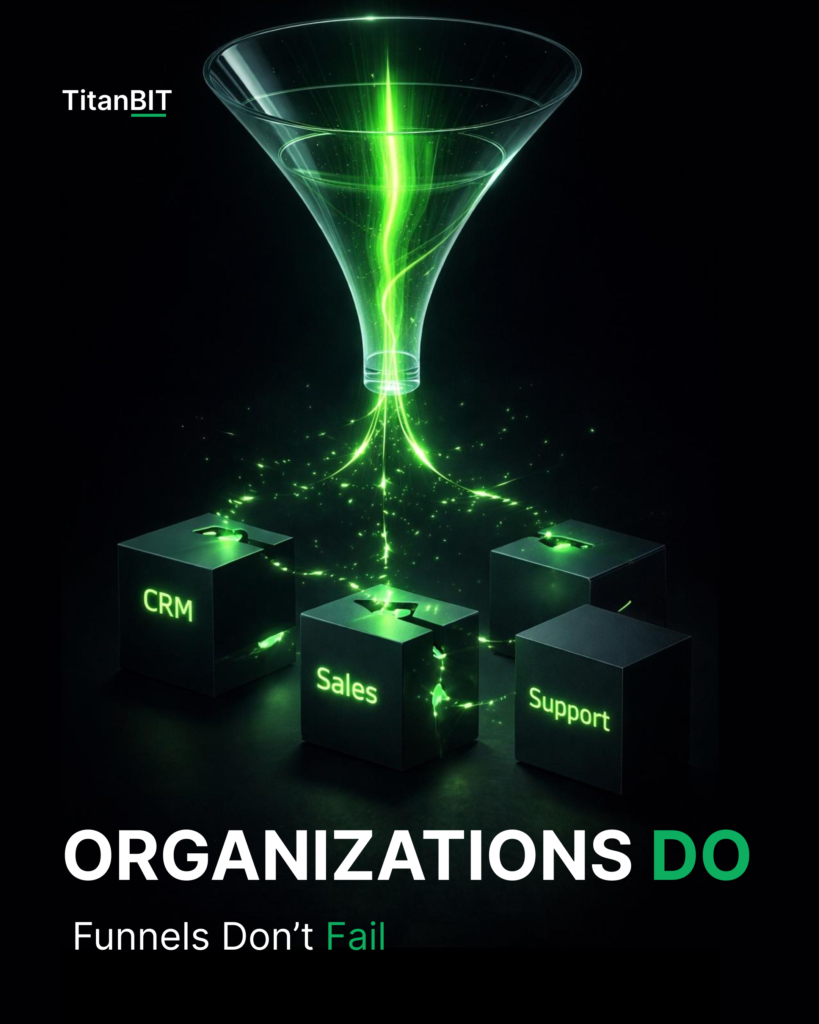
The Myth of the Broken Funnel
In recent years, the marketing funnel has become a popular scapegoat. Critics argue that it is too linear, too simplistic, and incompatible with modern customer behavior. As digital ecosystems grow more complex, the funnel is often labeled outdated.
Yet the underlying structure remains relevant.
Customers still discover brands. They still evaluate alternatives. They still make purchasing decisions. The progression may not be perfectly linear, but the stages of intent persist.
If funnels appear ineffective, the problem rarely lies in the model itself.
Where the Breakdown Actually Happens
The true breakdown occurs at the organizational level.
In many companies, the funnel is used as a reporting visualization rather than an operational framework. Different teams manage different stages without systemic coordination. Awareness metrics live in one dashboard. Conversion metrics live in another. Retention strategies are handled separately.
Execution becomes fragmented.
When each stage is optimized independently, customer journeys lose coherence. Signals from conversion rarely influence awareness targeting. Retention data doesn’t always inform acquisition logic. Budget allocation follows departmental priorities instead of unified objectives.
The structure exists. The system does not.
From Linear Model to Dynamic System
A system-based approach transforms the funnel from a static diagram into a dynamic architecture.
Centralized orchestration connects stages through shared data and unified decision logic. Behavioral signals from later stages influence earlier campaigns. Budget shifts happen automatically based on real-time performance. Personalization adapts across the entire journey.
The funnel stops being linear because the system becomes responsive.
This does not eliminate stages. It integrates them.
When execution is automated and governed by centralized decision layers, the customer journey evolves continuously. Friction decreases. Redundancy is reduced. Performance becomes more predictable.
Organizational Maturity Defines Funnel Performance
Blaming the funnel distracts from the real issue: operational fragmentation.
Organizations that treat marketing as a coordinated system can leverage funnel structures effectively. Those that rely on manual coordination and siloed teams struggle regardless of the model they adopt.
Funnels don’t fail because they are conceptually flawed.
They fail when organizations lack systemic execution.
The future of customer journey management is not about abandoning models.
It is about designing the architecture that makes them work.