
Personalization is Broken — Unless It’s AI-Powered
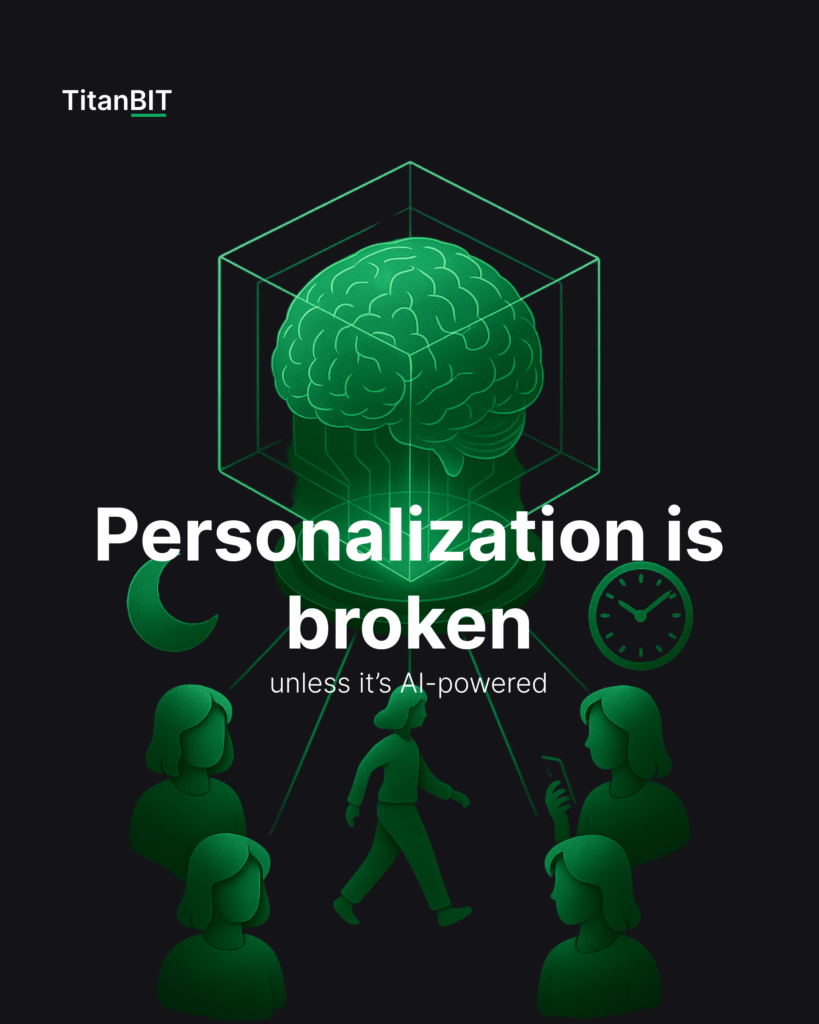
In 2025, personalization is no longer about guessing who your audience is. It’s about knowing what they’re doing — and why — in real time.
Still, most companies miss the mark.
CMOs are pouring budgets into AI tools without seeing the return. Not because the tech doesn’t work — but because they’re still stuck using 2010 logic in an AI-first world.
🔍 What’s wrong with traditional personalization?
It relies on demographics like gender, age, and job titles.
But that’s just surface-level. Two 30-year-olds may behave in radically different ways online.
Demographic-based targeting is lazy.
And users can feel it.
That’s why ad fatigue and digital noise keep growing.
🤖 What AI-powered personalization really looks like:
- Hyper-personalization based on behavioral patterns (not just clicks — time of day, sequence of actions, frequency)
- Predictive scoring to identify which users are likely to convert — before they do
- Dynamic content delivery in real time — not static email journeys or retargeting loops
🎧 Case Study: Spotify
Spotify doesn’t recommend music based on your age.
It knows that you play Lo-Fi at night and upbeat tracks after work.
So it adapts to your patterns, not your persona.
This keeps users engaged, increases time spent, and builds loyalty without pushy tactics.
🧠 The Bottom Line
Personalization isn’t about showing the right ad to the right “segment.”
It’s about designing an ecosystem that reacts to behavior, adapts in motion, and earns attention.
This is what AI does best — if you use it with a real strategy.
💬 How are you using AI in your personalization efforts today?
Are you segmenting — or predicting?