
Systems Thinking in Marketing: How Leaders Stay Ahead
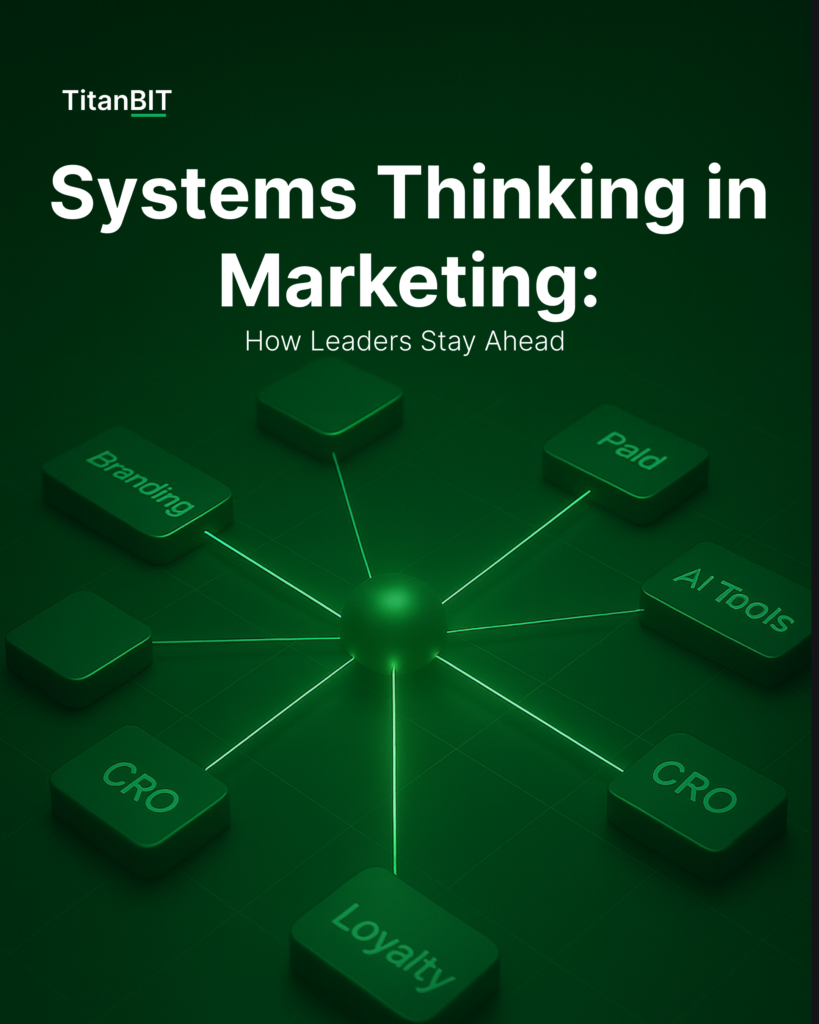
It’s not a campaign — it’s an ecosystem.
In 2025, marketing has stopped being about one campaign at a time. The market moves too fast, audiences expect too much, and technology connects everything. The strongest brands don’t just push ads — they engineer ecosystems. This is what systems thinking in marketing is all about. 🌍
Strategy: Defining the North Star 🎯
Every system needs direction. For leaders, strategy is not just a quarterly KPI sheet — it’s the North Star guiding every action. They don’t think “What’s trending now?” but rather “What serves our long-term positioning?”.
- They set frameworks for decision-making.
- They define what value their brand represents.
- They align marketing goals with product, sales, and customer service.
Without a clear strategic anchor, campaigns remain short-lived. With it — every message builds equity.
Design: Where Ideas Become Experience 🎨
Design is no longer just about “looking good”. In systems thinking, design is the language of the ecosystem. From UX to brand identity, it makes strategy tangible:
- UX design creates seamless customer journeys.
- Visual identity ensures consistency across touchpoints.
- Content design builds emotions, not just messages.
In other words, design is what allows people to feel the strategy, not just read about it.
Operations: Integration at Scale ⚙️
Great systems fail without execution. That’s why operations sit at the core of modern marketing ecosystems:
- Automation connects departments.
- Data flows ensure no decision is made blindly.
- Collaboration breaks down silos between marketing, sales, and service.
The outcome? Instead of random “loud” campaigns, companies deliver consistent experiences across every interaction.
Why It Matters in 2025 🌐
Markets are saturated. Ads alone don’t differentiate. Systems do. When brands practice systems thinking, they:
✅ Build resilience against market volatility.
✅ Turn campaigns into long-term experiences.
✅ Earn customer trust through predictable value.
This shift explains why companies with strong ecosystems show higher customer lifetime value (CLV), lower churn, and more efficient operations compared to campaign-driven players.
Final Thought 💡
Systems thinking in marketing is not a buzzword. It’s a survival strategy. Leaders in 2025 know that it’s not enough to launch campaigns — they must design ecosystems where strategy, design, and operations work as one.
👉 Do you think most brands are ready to move from campaigns to ecosystems, or will they lag behind?