
Speed Is No Longer an Advantage Without Structure
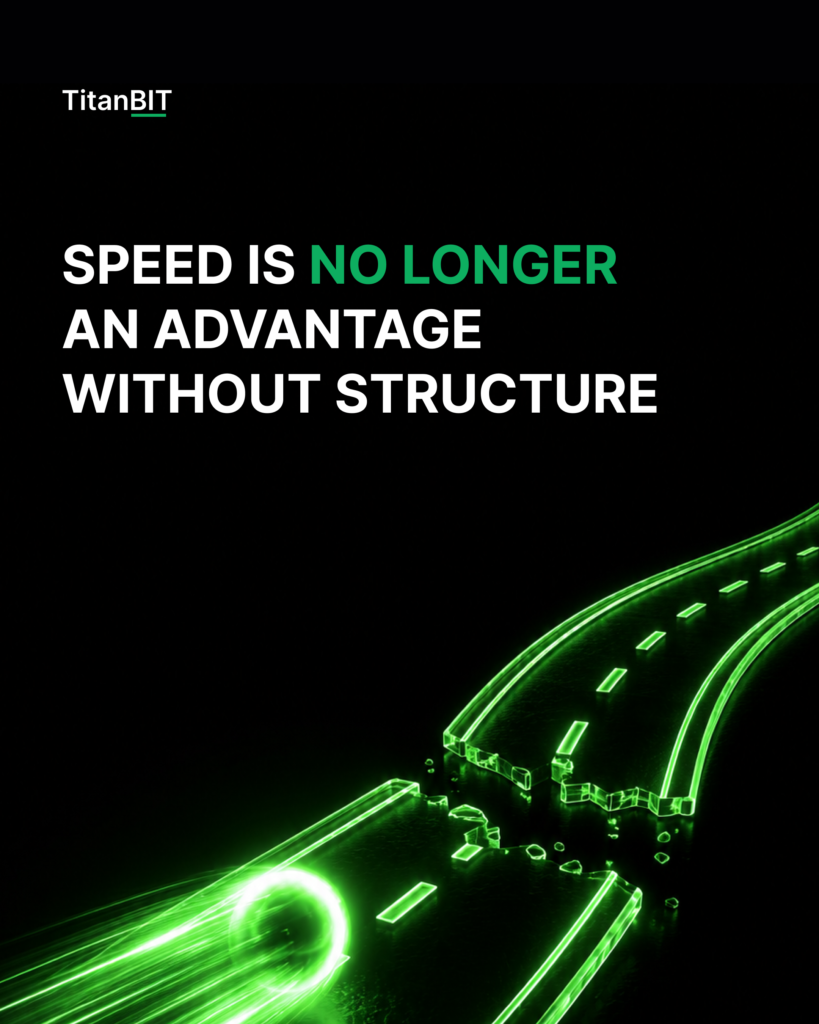
For years, speed was considered a key competitive advantage in business. Companies that could move faster — launch quicker, execute campaigns rapidly, and adapt in real time — consistently outperformed others.
Today, that advantage is disappearing.
Speed Has Become the Standard
With the rise of AI, automation, and advanced tools, speed is no longer rare. Almost every company can accelerate execution, streamline workflows, and respond quickly to changes.
This creates a new reality.
Speed is no longer a differentiator.
It is the baseline.
When Speed Turns Into Chaos
The assumption is that faster execution leads to better outcomes. In reality, this only holds true when there is a strong system behind it.
Without structure, speed amplifies existing problems.
Processes become unstable under pressure.
Decisions become inconsistent.
Teams move quickly — but not in alignment.
This leads to increased activity without meaningful progress.
Companies find themselves doing more, but achieving less.
Why Structure Matters More Than Speed
Structure is what transforms speed into results.
A well-designed system ensures that every action contributes to a larger outcome. It connects processes, aligns decisions, and creates a clear direction.
Without this foundation, acceleration only creates disorder.
This is why many organizations struggle after adopting AI and automation. The tools increase speed, but the underlying system is not built to handle it.
Conclusion
Speed alone is no longer enough.
In a world where everyone can move fast, the real advantage comes from structure.
The companies that win are not the fastest.
They are the most organized.
💬 Is your system built to scale with speed — or break because of it?