
Work Doesn’t Need More Tools. It Needs an Operating System.
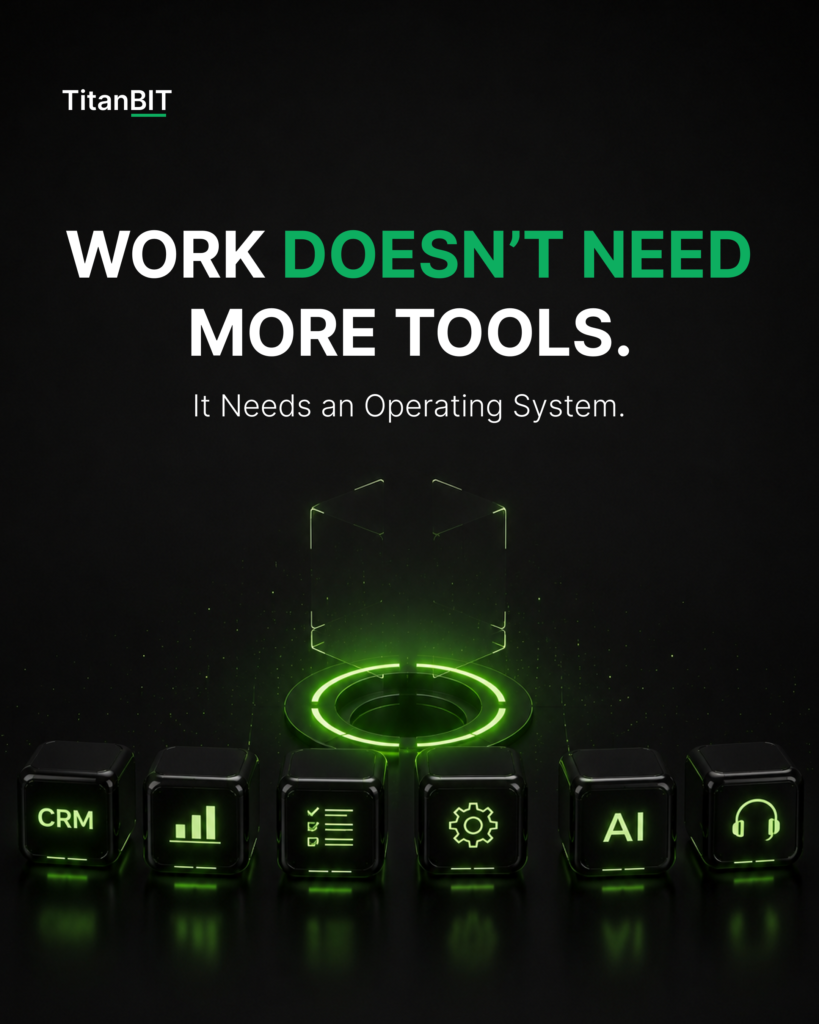
Modern companies are surrounded by tools.
There is a CRM for sales, a dashboard for analytics, a task manager for operations, automation software for repetitive work, communication platforms for teams, and AI assistants for content, research, reporting, and decision support.
At first, this looks like progress. More tools should mean more speed, better visibility, and stronger execution. But in many companies, the opposite happens. The tool stack grows, while the work becomes harder to control. ⚙️
More Tools Do Not Create a System
A tool can solve a specific problem. A CRM can store customer data. A dashboard can show metrics. A project management platform can organize tasks. AI can speed up analysis or content creation.
But tools do not automatically create a business system.
When every platform works separately, teams still need to connect the process manually. Data has to be copied, tasks have to be updated, reports have to be checked, and decisions often happen outside the workflow.
This creates a hidden operational cost. The company looks digital, but the real system still depends on people remembering, transferring, fixing, and coordinating work between disconnected platforms.
Why Work Needs an Operating System
A business operating system is not another app in the stack. It is the logic that connects tools, data, workflows, ownership, and decisions into one structure.
It answers the questions that tools alone cannot answer.
Where does work start? Who owns each step? What happens automatically? Where is human approval needed? How does data move from one team to another? How are results measured?
Without this operating logic, companies do not scale. They simply add more software to the same fragmented process.
AI Needs Structure to Create Value
AI can make work faster, but it cannot replace the need for structure.
If workflows are unclear, AI will only accelerate unclear execution. If ownership is missing, AI will not fix accountability. If data is fragmented, AI will work with fragmented inputs.
AI creates real value when it becomes part of a connected operating system. It can summarize signals, trigger actions, reduce manual coordination, and support better decisions — but only when the system around it is designed.
From Tool Stack to Operating System
The future of work is not about adding more tools. Most companies already have enough.
The real advantage will belong to companies that connect their tools into one clear operating model.
Because tools can support work.
But an operating system makes work scalable, visible, and repeatable.